
Lao Tzu said, “Stop thinking, and end your problems.”
What?
Are you freaking kidding me, Lao Tzu?
Stop thinking!
Ha!
You’re kidding, right?
No? You’re not?

https://rotb.org/wp-content/uploads/2019/02/Stop-Thinking-Rabbi-Brian-1.png
*Considering it*
OK, I get it.
I get the idea: thinking leads to judgment, and judgment leads to problems.
So, if we proverbially go upstream, we can head the problems off before they start.
(A video of my telling of the “upstream/downstream parable”.)
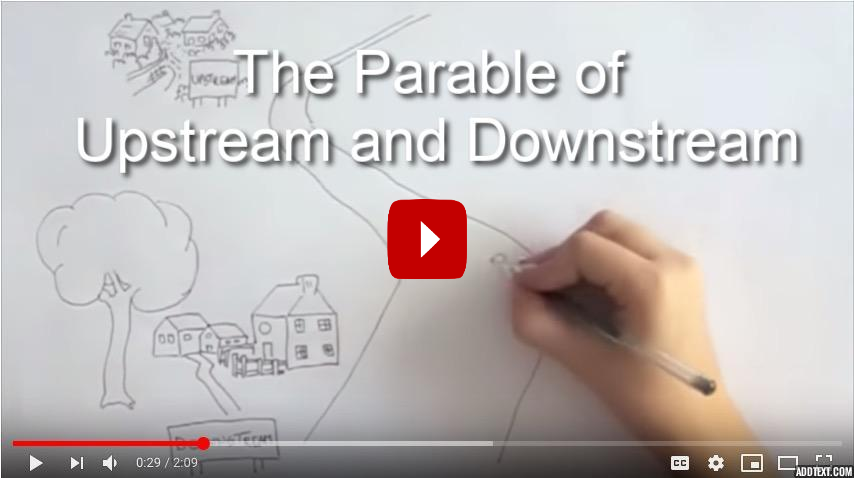
https://www.youtube.com/watch?v=Hqn-tEkRw-g
If we stop thinking, we can, theoretically, stop our problems.
But how am I gonna stop thinking?
I have a really dear friend in a hospital in the ER and another one whose father is in hospice, and I’m thinking about flying there to be supportive and helpful.
So I am just supposed to stop thinking about this?
How?
*Watering thoughts*
My friend James, the prison Bodhisattva I’ve written about, says “If you don’t want it to grow, don’t water it.”
Before we think about thoughts, let’s look at a different example: complaints.
The more you complain, the more you water that thing about which you are complaining.
Two notes: (1) I only count externally-vocalized gripes as complaints. (2) Human beings heal through the cathartic processing of one’s trauma – this is natural and healthy; but be cautious about decorating and tending to a shine to your pain.
Complain too much about a situation, and you might be watering the thing and help that thing to take root.
Thinking is similar.
When we find ourselves thinking/perseverating about a topic, we might wonder, “Am I watering the right thing?”
The Mueller investigation, our weight, that we get anxious – these are all things about which we might get anxious and then add fuel to the flames when we continue to think about them.
We have the ability – and we must train ourselves in this spiritual practice – to interrupt our thinking/perseverating with gentle, kind reminders. We can interrupt this pattern by instead noticing bodily sensations or to think of something about which we have gratitude.
Think of your thoughts as a radio station you listen to or a newsfeed you monitor. You can change the station. You can read something else!
Be wary what you water.
*Practice*
It will take practice. Your radio is pre-tuned to certain stations. You are accustomed to reading certain newsfeeds. Your brain is accustomed to thinking certain thoughts.
It will take practice to interrupt and change your thinking.
It will take practice to notice and be mindful about what you are watering.
*Two wolves*
One evening, an elderly Cherokee told his grandson about a battle that goes on inside people.
He said, “My son, the battle is between two wolves inside us all. One wolf is anger, and the other wolf is peace, love, and patience.”
The grandson thought about it for a minute and then asked his grandfather, “Which wolf wins?”
The old Cherokee simply replied, “The one you feed.”
Similarly, in Berakot 7a, in the Talmud, the question “what does God pray?” is answered. Rabbi Zutra, the son of Tovia, said, in the name of Rav, “God’s prayer is ‘May my attribute of mercy and kindness outweigh my attributes of judgement and vengeance.’”
I love that even God needs to keep this in mind and struggles with it.
*Choose*
Changing your thoughts to keep yourself from suffering by your own thinking is the path of a spiritual jedi.
Easy? No.
Doable? Yes.
Fun? Maybe.
Worth it? Yes, yes, yes.
If you can’t do this by yourself, that’s nothing to be ashamed of. We all need help. From the first issue of this newsletter in 2019,<https://oldrotb.wpengine.com/2019/01/04/help/> the story of Dave at the arcade machine:
Being able to ask for help is an indication of spiritual fitness. It takes spiritual strength to ask for help.
If you think a spiritual director, therapist, or other expert could help you in this, please seek out some help. (Your peace of mind is worth the discomfort of asking for help.)
So, while we might not be able to turn off our thinking, we can change the station; we can change the newsfeed; we can choose to water other thoughts – like compassion, kindness, or a simple dare to ourselves to sit in the discomfort for longer than we had ever imagined we could.
For the next hour, experiment with your ability to choose which thoughts you water.
And maybe set an alarm https://www.online-stopwatch.com/timer/1hour/ to remind you to try it again in the next hour.
 With love,


